
Designing with Light: Skylights in Historic Townhouses
Throughout New York City, townhouses share one common challenge: building lots are narrow and deep. The houses atop these lots are similarly narrow and deep, connected to each other via party walls. Therefore, the middle of the building, where stairwells traditionally are located, is a dark space. One of the opportunities we have to make a significant difference in a home is to allow sunlight to flow through the center of these dim areas to beautiful homes via a skylight atop the stairwell.
Creating Skylights Above Stairwells
Finish Photography: Peter Peirce
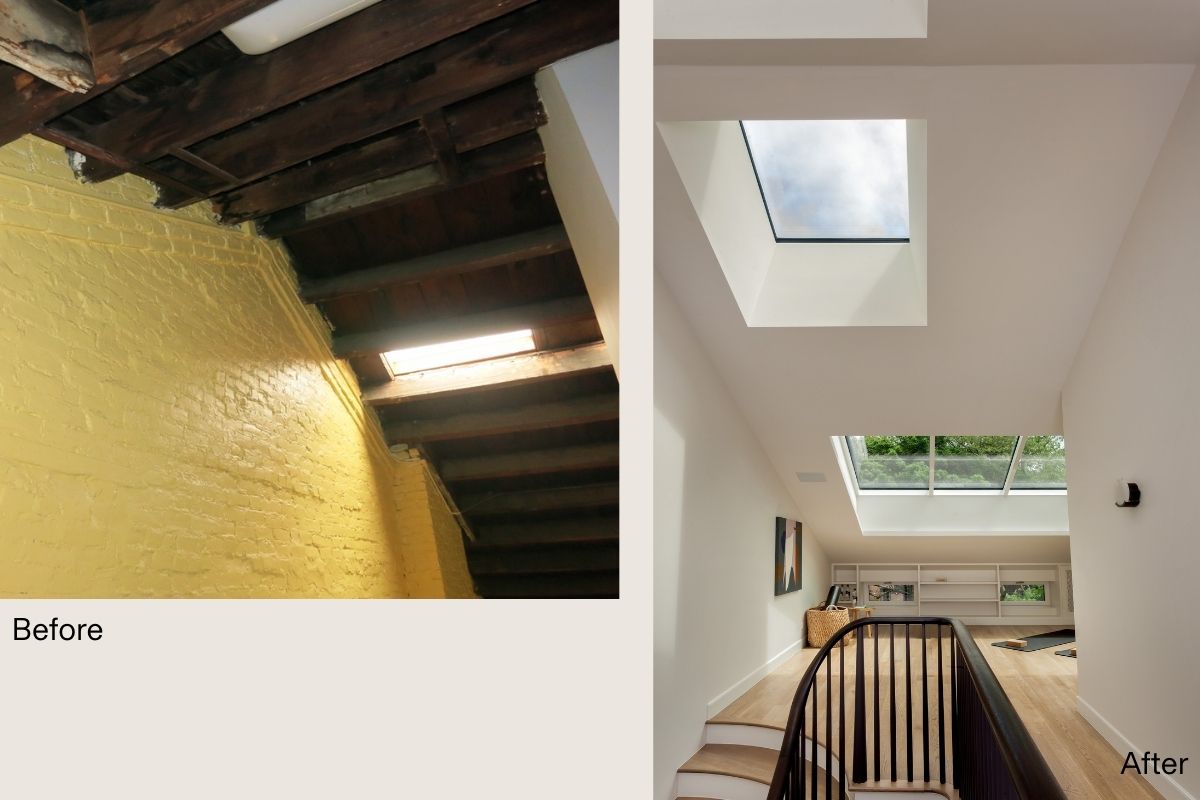
Adding a skylight above the staircase can transform the upper floors of a building. In this house, we collaborated with SMR Craftworks to relocate the stairs to the top floor to align with the staircase to the lower floors and added two larger skylights above, taking advantage of the existing pitched roof. This better connected the top floor to the rest of the house, both physically and visually.
The new skylights and now continuous stairwell completely unlocked the center portion of the house, allowed light to pour all the way to the parlor floor, and improved access to what was a completely disconnected floor from the rest of the house. These changes transformed the usefulness of the floor and the entire experience on the floors below.
Finish Photography: Peter Peirce
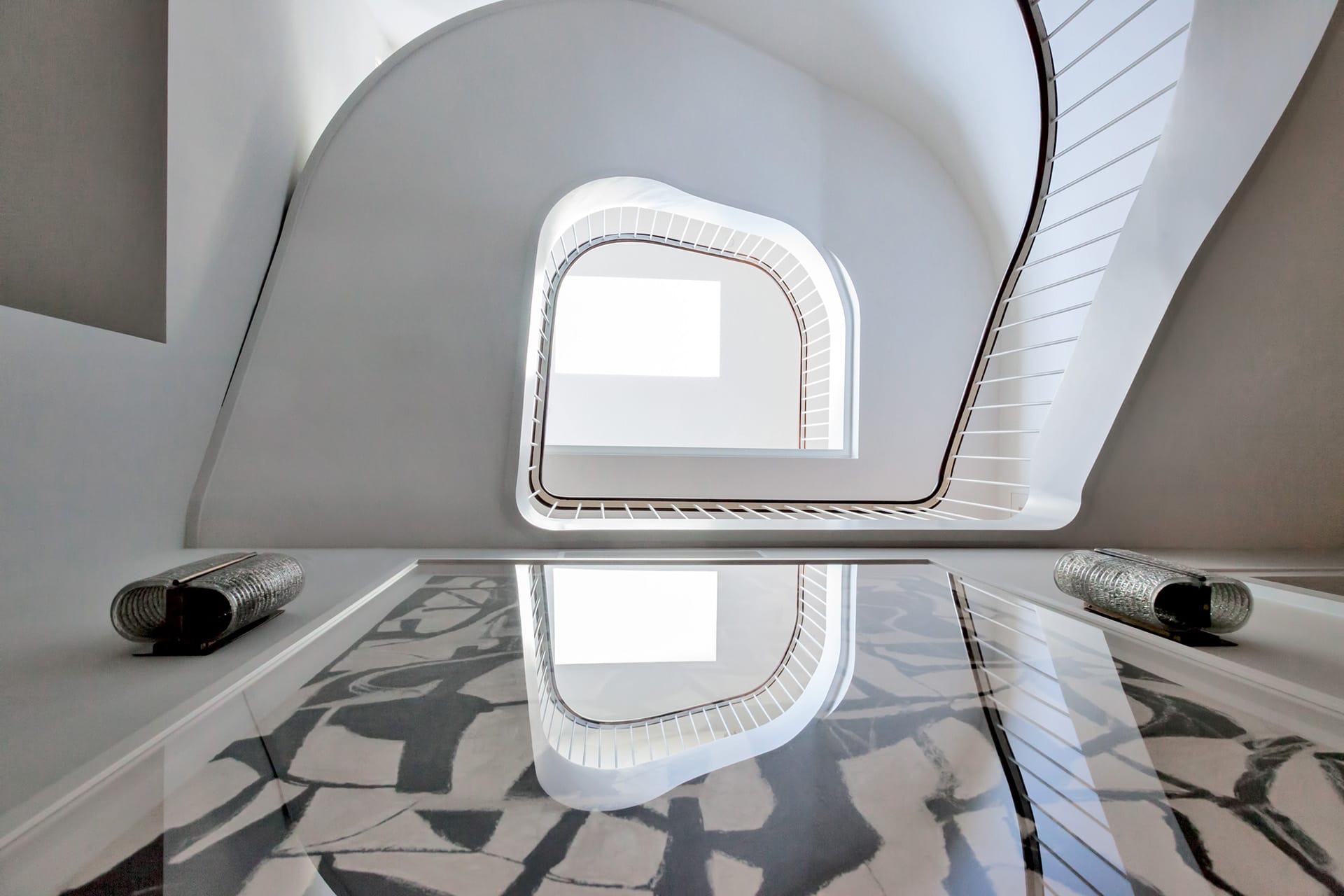
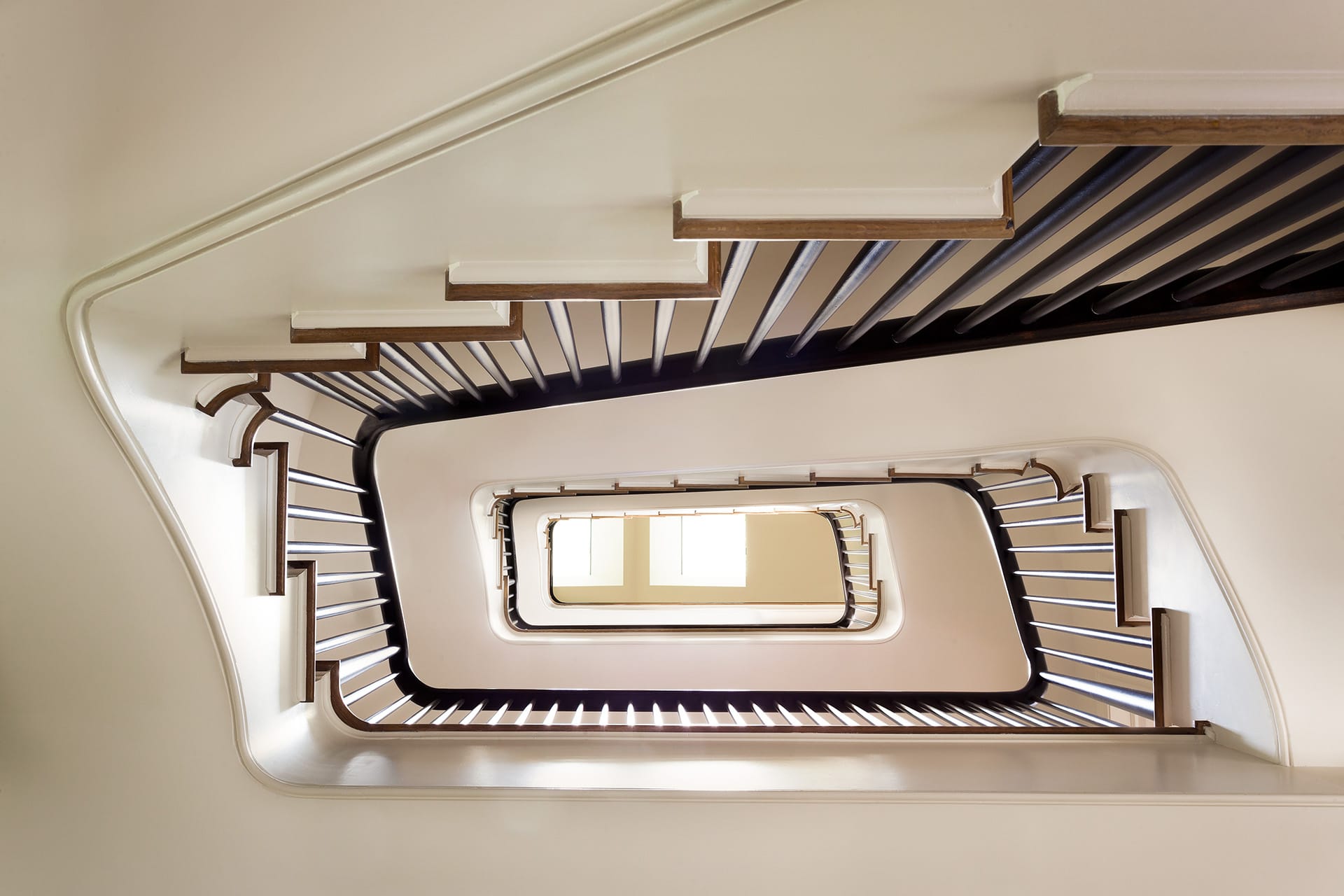
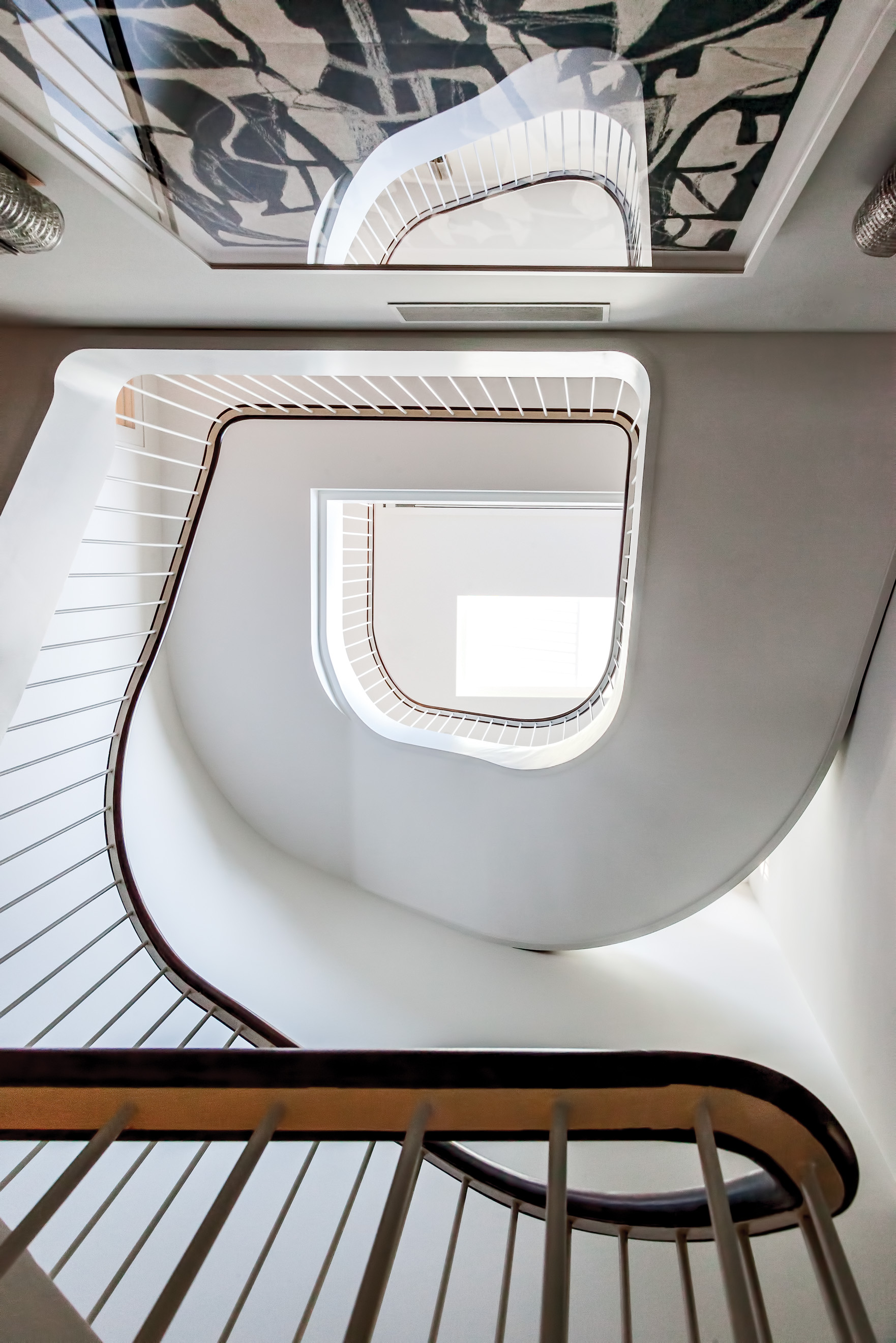
Alongside Kleen Construction, we used the significant amount of structural repair that this Brooklyn Heights Passive House needed as an opportunity to create a light-filled stairwell.
The staircase starts as a ribbon on the parlor floor that widens with each passing floor, culminating in a newly created upper level with both a skylight and large expanses of glazing to bring light into the home. When designing the staircase, we strove to create an artistic, sculptural experience as you move from one level of the home to the next. The result is a home that is bright, airy, and inviting from the parlor floor all the way to the top level.
Restoring Historic Skylights
Finish Photography: Adam Kane Macchia
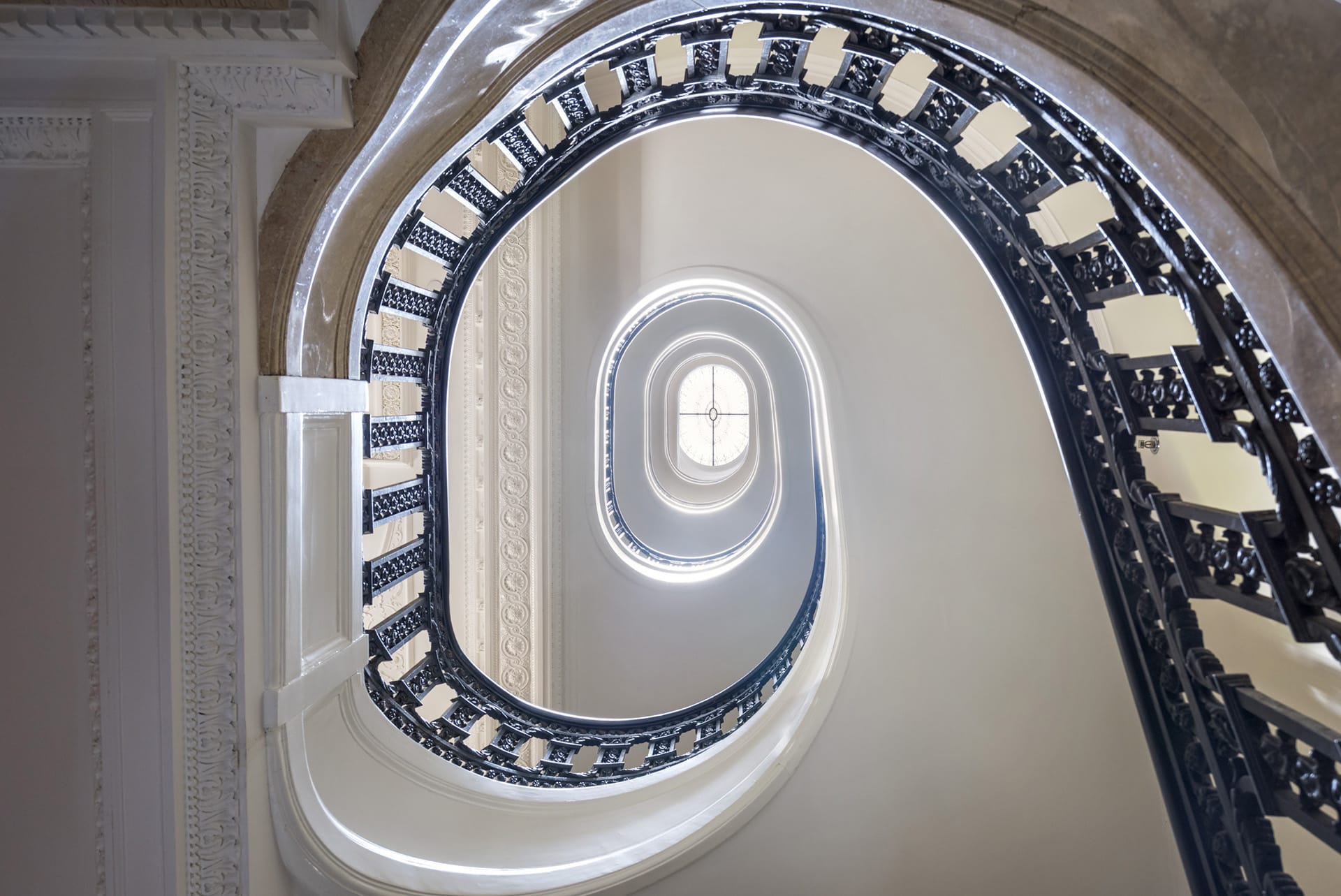
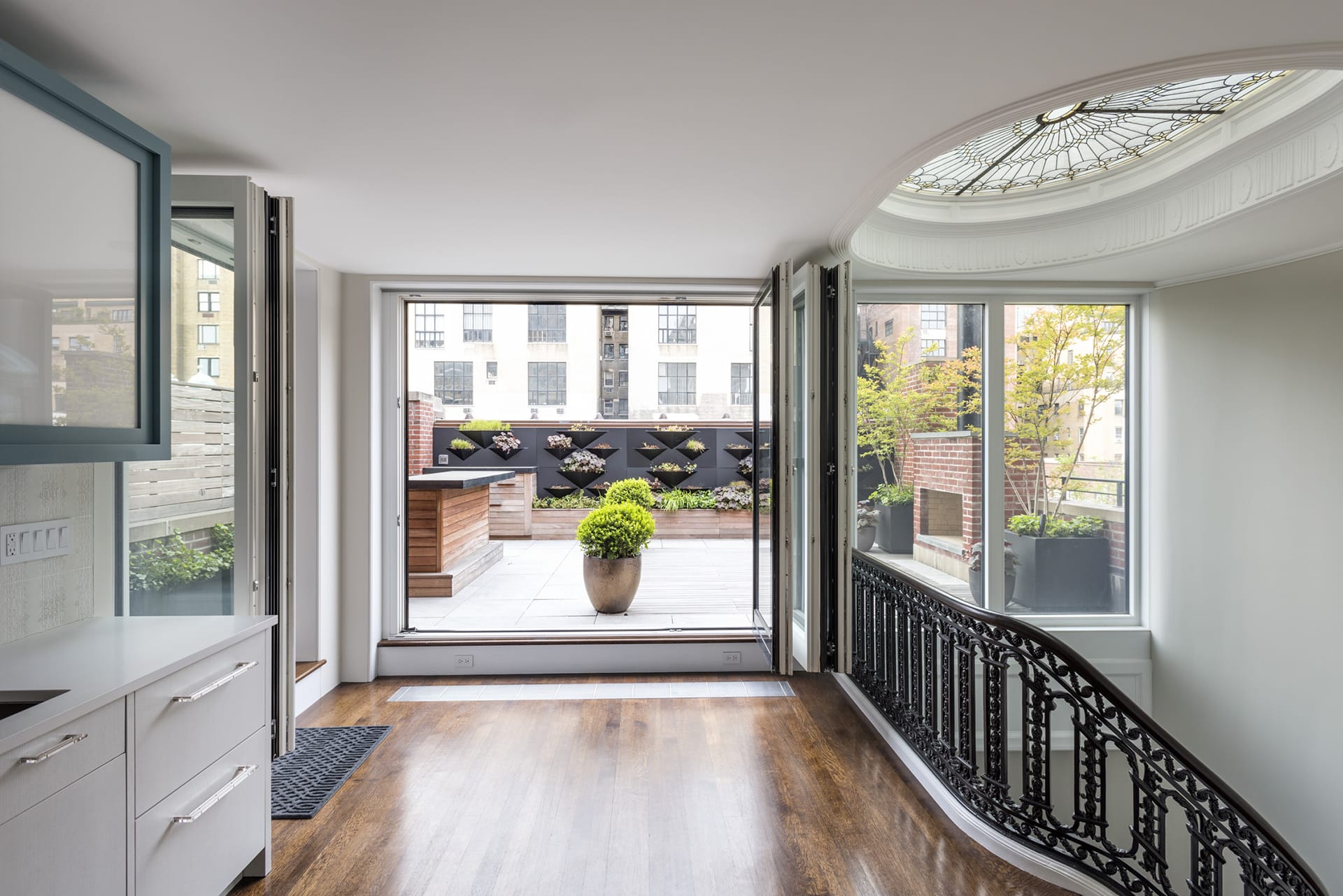
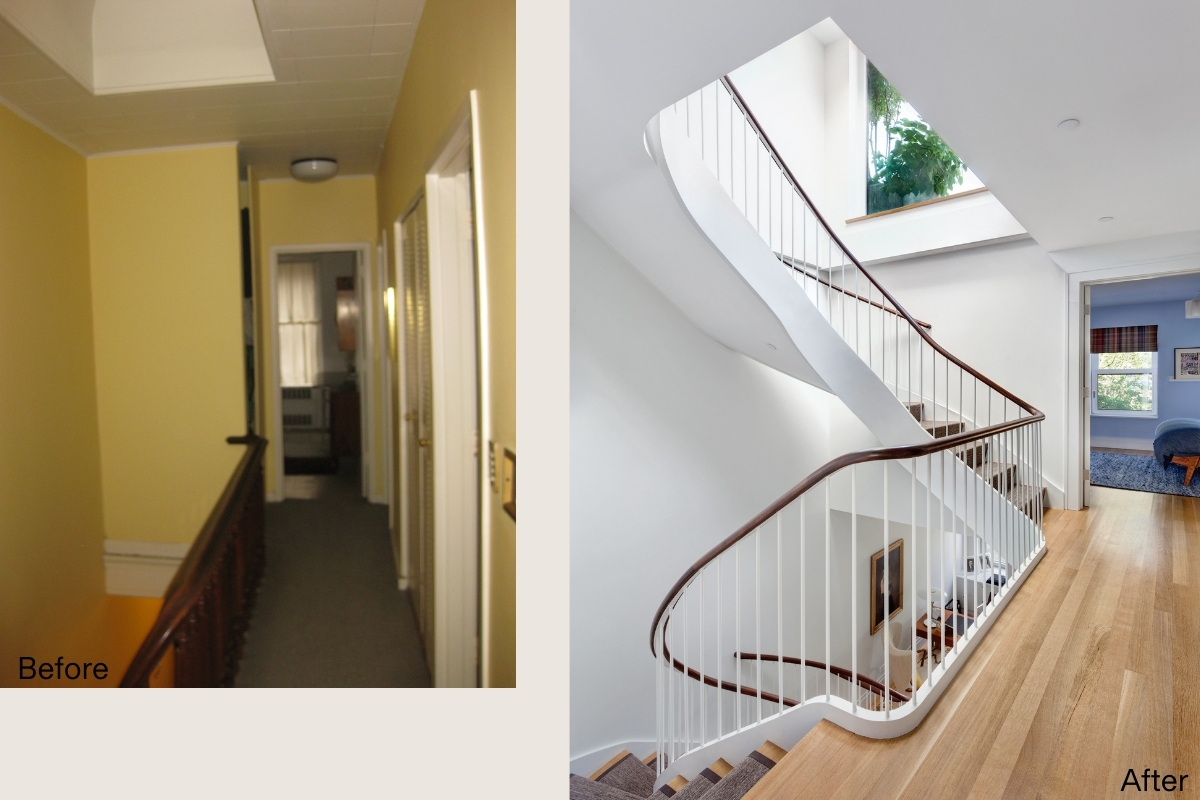
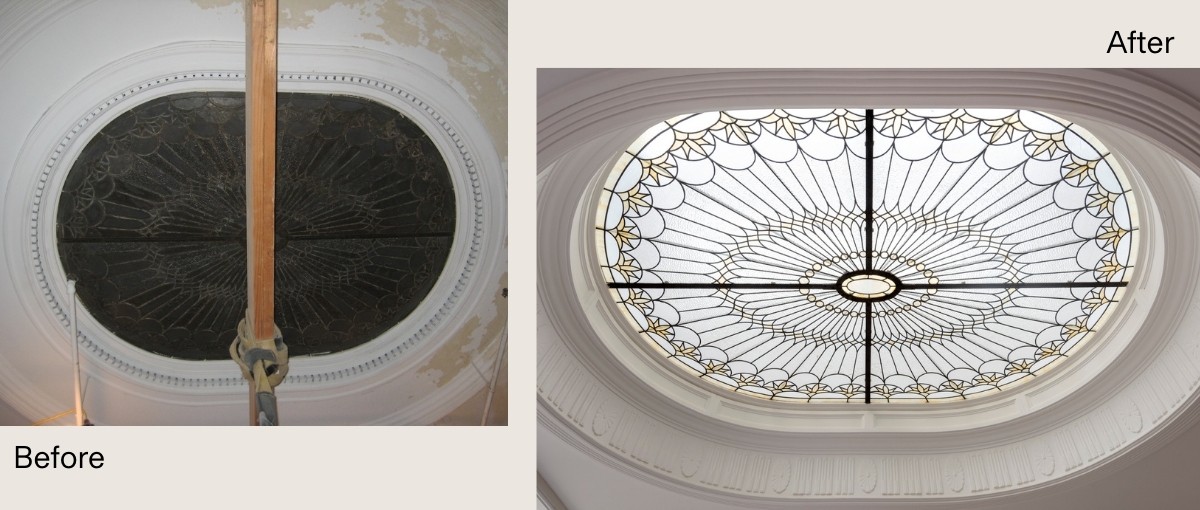
This beautiful Upper West Side mansion was held back by a dark stairwell and a penthouse that was disconnected from the rest of the house. We collaborated with Interior Alterations and their team of artisans to create a new run of stairs that perfectly matched the wrought iron stairs on the lower level, and with Sunburst Studios to restore the incredible, original leaded glass skylight that had been covered for decades. The decorative skylight is protected by a Passive House quality triple-paned skylight, ensuring a high level of performance while allowing for a tremendous amount of light to pour through the center of what was once a dark space.
Getting Creative with Walkable Glass
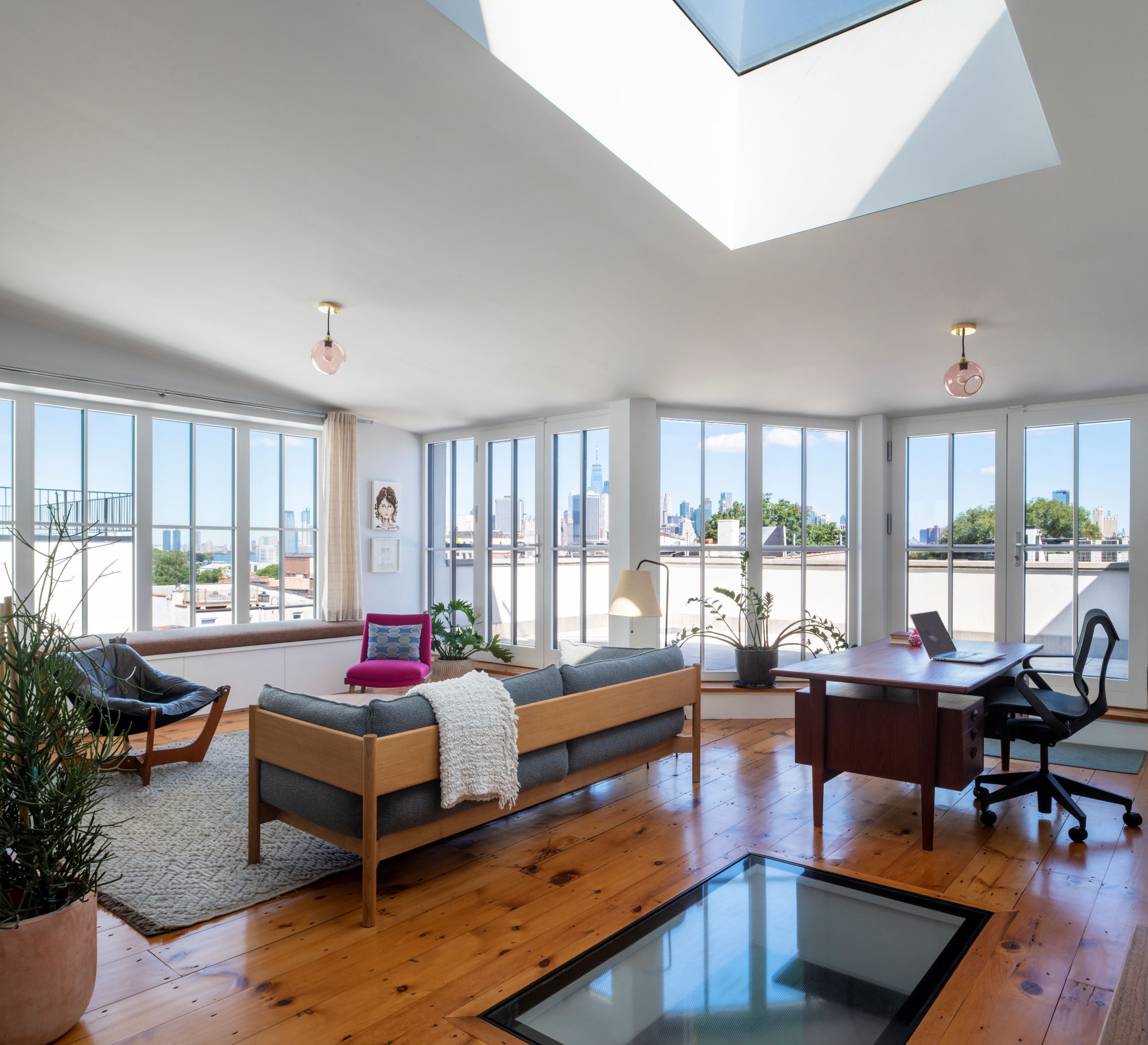
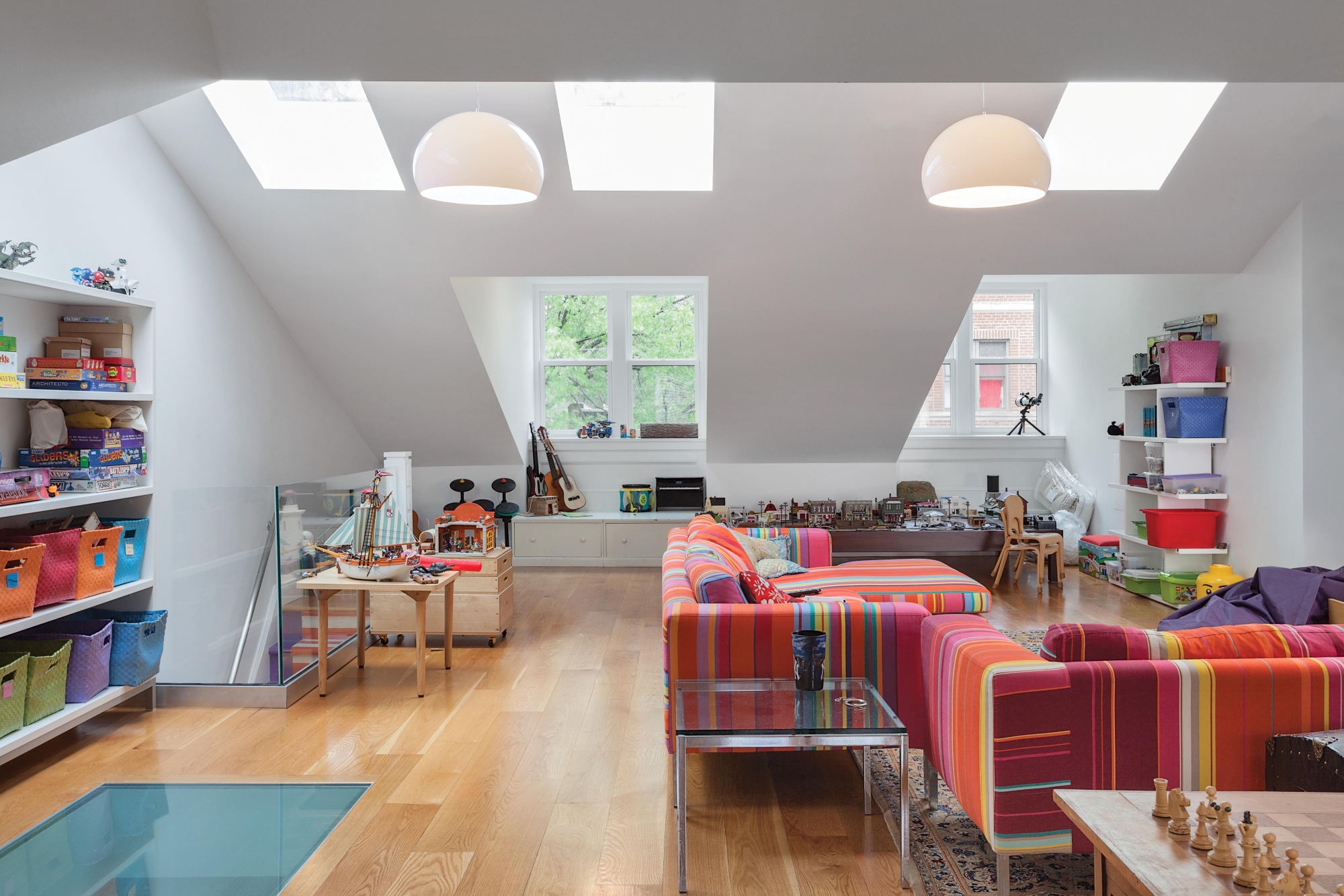
Photography: Adam Kane Macchia (left), Peter Peirce (right)
Occasionally, the staircase leading to the top floor does not align with the staircase below. While this can present a challenge, it also provides an opportunity to make fun moves on the top floor.
In a Carroll Gardens Passive House, where we collaborated with SMR Craftworks, and a Brooklyn Heights Townhouse, constructed by Kleen Construction, we installed walkable glass floors on the upper levels, directly above the main stairwell. They take the light from the skylights above and allow it to pass through to the stairwells below. Not only do these glass portions of the floor ensure floor area is maximized, but they also become focal points in the space. For renovation projects, this is a potential win-win, as it's minimally invasive and a fun way to connect your home across levels.
Maximizing Light with Splayed Openings
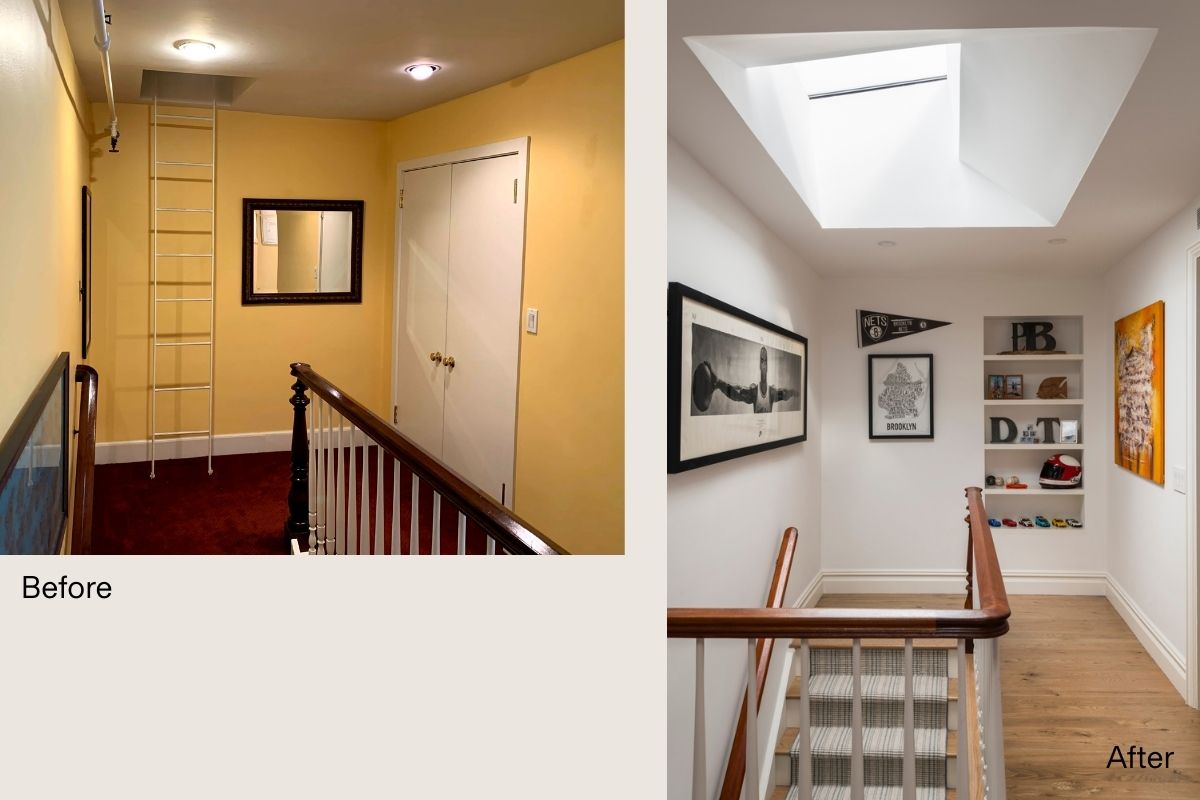
Finish Photography: Adam Kane Macchia
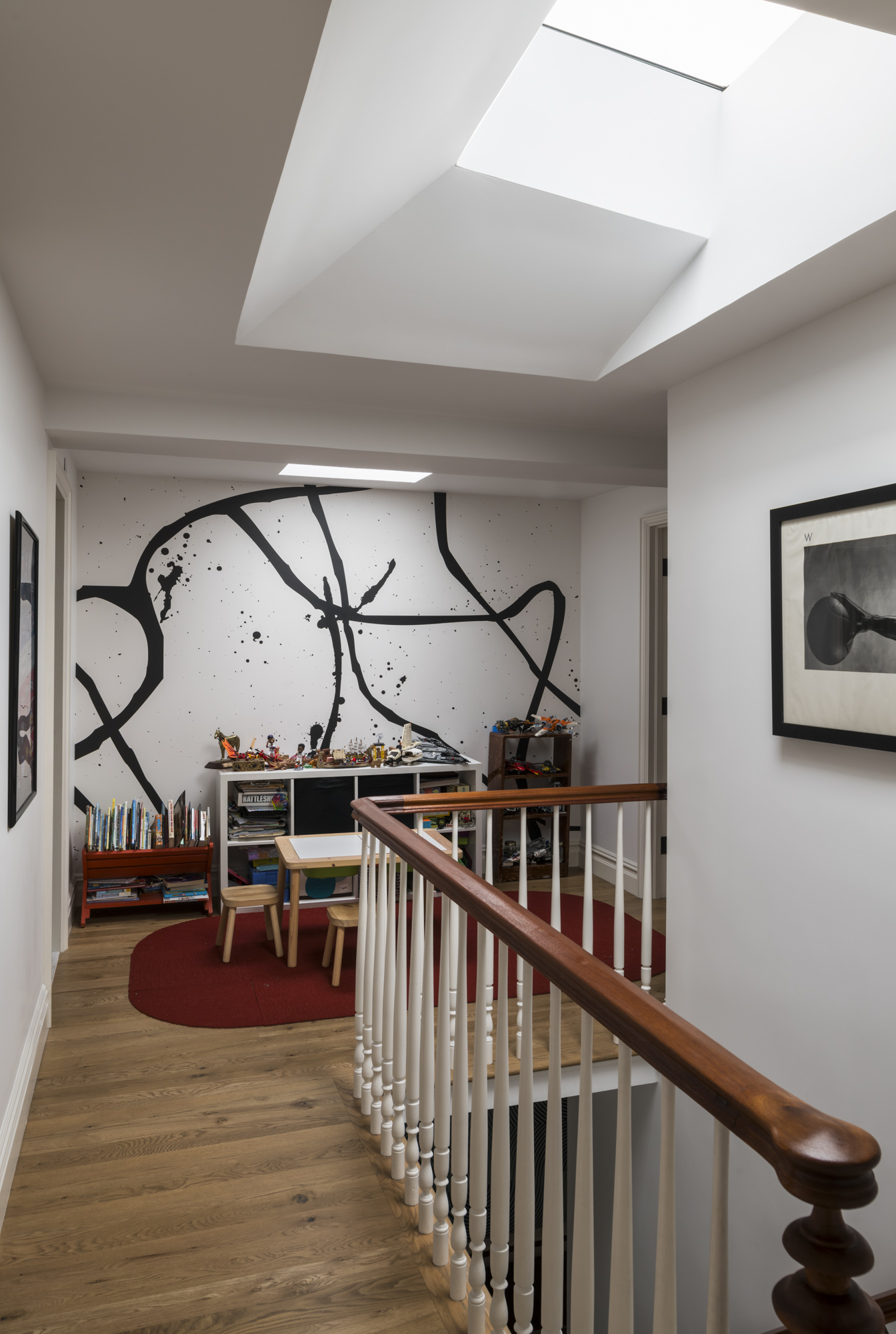
Sometimes, a roof cannot handle a larger skylight, so we need to maximize the amount of natural light that enters the home without increasing the size of the glazing. Splaying the sides of the skylight opening is one possible solution. In this Brooklyn Heights Townhouse, we designed an asymmetric arrangement crafted by MLZ General Construction that elevates the top floor. While the existing flat ceiling on this floor was not part of our renovation, modifying just the portion around the skylight allowed natural light to pour into the floor below and elevated the top floor.